Running a Magento 2 store is brilliant for scaling your e-commerce business. But here's the thing: having a fantastic store means nothing if no one's finding it. That's where Google Ads comes in, and more specifically, targeting those high-intent shoppers who are ready to buy right now.
If you've been pouring money into ads without seeing the returns you'd hoped for, or you're just getting started with paid advertising, this guide will walk you through how to drive the right traffic to your Magento 2 store. Not just any traffic: traffic that converts.
What Is High-Intent Traffic (And Why Should You Care)?
Let's break this down simply. High-intent traffic refers to visitors who are actively looking to make a purchase. They're not browsing aimlessly or doing casual research: they've got their card ready and they're looking for the right product.
Think about it this way:
- Low intent: "What are the best running shoes?" (Just researching)
- High intent: "Buy Nike Air Max size 10 UK free delivery" (Ready to purchase)
The second searcher is far more valuable to your business. They know what they want, and if your Magento store shows up at the right moment with the right offer, you've got yourself a sale.
Google Ads captures customers at exactly this moment: when they're actively searching for products like yours. That's the magic of paid search done properly.

How Google Ads Works With Your Magento 2 Store
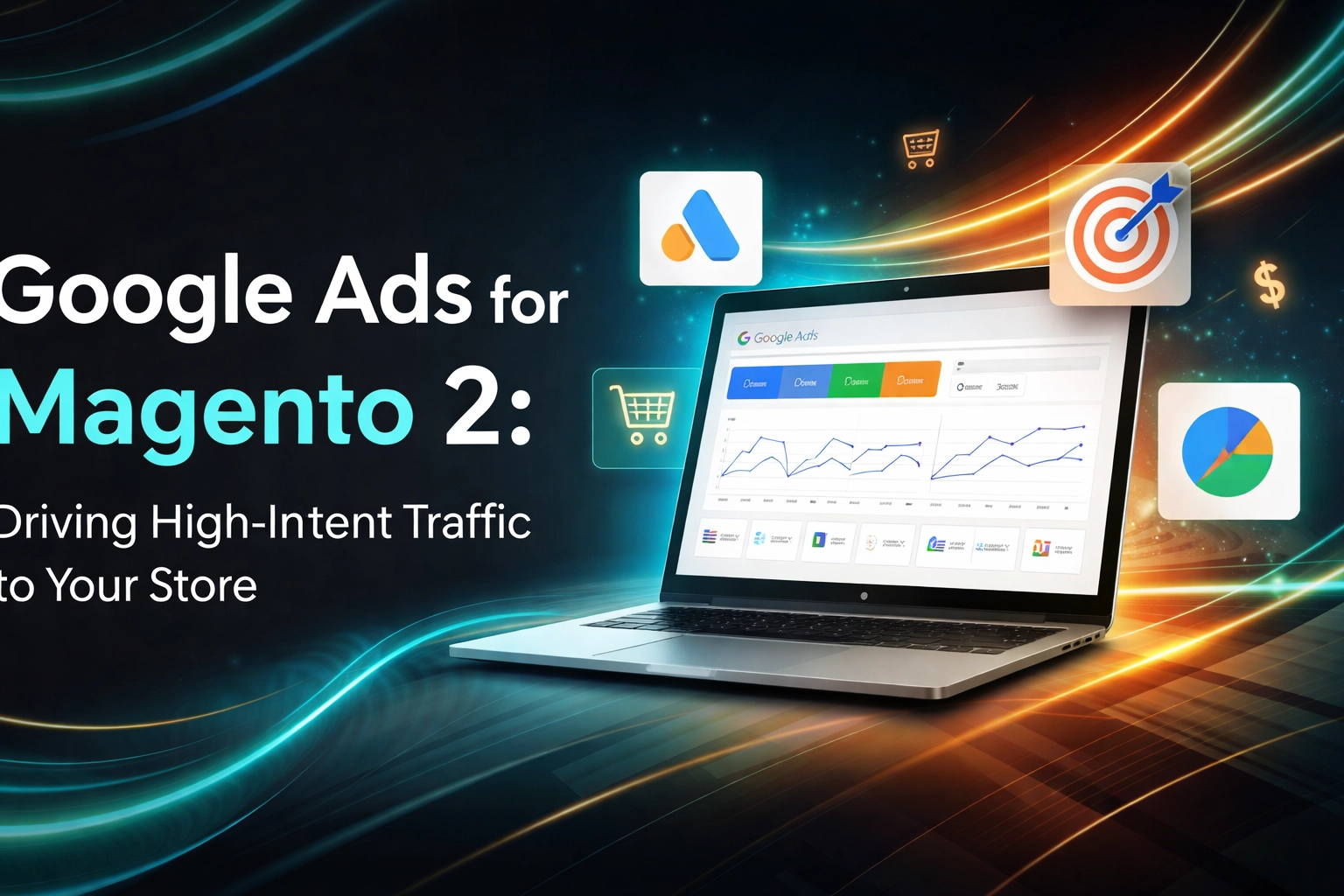
Google Ads integrates with Magento 2 to display your products directly in Google Shopping results and search ads. When someone searches for a product you sell, your store can appear right at the top of the results, complete with images, prices, and direct links to your product pages.
This integration connects your store with Google's advertising ecosystem, allowing you to:
- Show your products in Google Shopping ads with images and pricing
- Appear in search results for relevant keywords
- Track conversions so you know exactly which ads drive sales
- Optimise your ad spend based on real performance data
The beauty of this setup is that you're reaching people who are already interested in what you're selling. You're not interrupting someone watching cat videos: you're showing up when they're actively searching for your products.
Targeting High-Intent Keywords: The Key to Better Returns
Here's where many e-commerce owners go wrong. They bid on broad, generic keywords and wonder why their cost-per-acquisition is through the roof.
The secret? Focus on high-intent keywords.
What Makes a Keyword "High-Intent"?
High-intent keywords typically include:
- Product-specific terms: Brand names, model numbers, specific product types
- Purchase language: "Buy," "order," "shop," "deal," "discount," "free delivery"
- Location modifiers: "UK," "next day delivery," specific cities
- Comparison terms: "Best price," "cheapest," "vs"
For example, if you sell outdoor furniture, here's the difference:
| Low-Intent Keyword | High-Intent Keyword |
|---|---|
| Garden furniture ideas | Buy rattan garden sofa set UK |
| Outdoor seating | Garden furniture free delivery |
| Patio design | Best price garden dining table |
The high-intent keywords cost more per click, but they convert far better. You'd rather pay £2 for a click that turns into a £200 sale than £0.50 for ten clicks that go nowhere.
Practical Tips for Finding High-Intent Keywords
- Look at your existing search data – Check what people are already searching for when they find your products
- Use Google's Keyword Planner – Filter by commercial intent and purchase-related terms
- Analyse your competitors – What terms are other Magento stores in your niche bidding on?
- Think like your customer – What would you type if you were ready to buy your product right now?
Setting Up Google Ads for Your Magento Store
Getting Google Ads running with Magento 2 involves connecting a few key pieces:
Google Merchant Centre is where your product information lives. This includes your product titles, descriptions, prices, images, and availability. Think of it as your product catalogue that Google uses to display your items in Shopping ads.
Google Ads is where you create and manage your actual advertising campaigns. You set your budgets, choose your keywords, and decide how much you're willing to pay for clicks.
Your Magento 2 store feeds product information to Google Merchant Centre and tracks what happens when visitors arrive from your ads.
The technical setup involves connecting these systems so they communicate properly. Your product feed needs to meet Google's requirements, your conversion tracking needs to record sales accurately, and your campaigns need to be structured for optimal performance.
This is where having expert help makes a real difference. A poorly configured setup means wasted ad spend and missed opportunities. A well-optimised setup means every pound works harder for your business.
Measuring What Matters: Conversion Tracking
Running Google Ads without proper conversion tracking is like driving blindfolded. You might be heading in the right direction, but you've no idea until you crash.
Conversion tracking tells you exactly which ads, keywords, and campaigns are driving actual sales: not just clicks, but revenue.
With proper tracking in place, you can see:
- Which products generate the most ad revenue
- Which keywords deliver the best return on investment
- Where you're wasting money on clicks that don't convert
- How to allocate your budget for maximum results
This data is gold. It lets you double down on what's working and cut what isn't. Over time, your campaigns become more efficient, your cost-per-sale drops, and your profits grow.

Why Your Product Feed Matters More Than You Think
Your product feed is the foundation of your Google Shopping campaigns. If your feed is messy, incomplete, or doesn't meet Google's requirements, your ads won't perform well: or might not show at all.
A well-optimised product feed includes:
- Clear, keyword-rich product titles
- Detailed descriptions that highlight key features
- High-quality images that meet Google's specifications
- Accurate pricing and availability information
- Proper categorisation using Google's product taxonomy
Many Magento store owners underestimate how much their feed quality affects their ad performance. Better feed = better ad placements = more clicks = more sales.
Keeping your feed synchronised with your Magento store is also crucial. If a product goes out of stock or prices change, your ads need to reflect that immediately. Nothing frustrates a shopper more than clicking an ad for a product that's unavailable.
Getting Results Without the Headaches
Here's the honest truth: Google Ads can be incredibly profitable for Magento 2 stores, but it's also easy to burn through budget if you don't know what you're doing.
Between keyword research, campaign structure, bid management, feed optimisation, and conversion tracking, there's a lot that needs to go right. And that's before you even think about ongoing optimisation and testing.
This is exactly why we help e-commerce businesses with their Magento development and PPC advertising.
At NEXT Digital Agency, we build and optimise Magento 2 stores that are ready for growth. We focus on results and on-time delivery because we know your business can't afford delays or half-measures.
Whether you need a complete Magento 2 build, help optimising your existing store for paid advertising, or expert management of your Google Ads campaigns, we've got you covered.

Ready to Drive High-Intent Traffic to Your Store?
If you're running a Magento 2 store and want to see better returns from your advertising, it starts with the right setup and strategy.
Here's what we recommend:
- Audit your current setup – Is your store ready for paid advertising? Is your product feed optimised?
- Focus on high-intent keywords – Stop wasting money on browsers and start targeting buyers
- Track everything – Make sure you know exactly what's driving sales
- Get expert help – The right partner can save you time, money, and frustration
Want to see how your Magento store stacks up? Get a free website audit from our team, or get in touch to chat about your e-commerce goals.
We're here to help you grow: on time and on budget.