

Running a Magento store in 2026 means playing by Google's evolving rules, and the game has gotten more sophisticated. While your competitors are still figuring out basic SEO, you can get ahead by mastering the technical foundation that actually drives long-term organic growth.
Technical SEO isn't about complicated coding (thankfully!). It's about making your Magento store irresistible to search engines while creating a smoother experience for your customers. Think of it as the invisible infrastructure that turns casual browsers into loyal buyers.
Let's dive into the seven checkpoints that separate thriving Magento stores from those struggling to get noticed.
1. Clean Up Your URL Structure and Parameter Mess
Your URLs are like your store's address system. If Google can't easily understand where everything lives, you're making it harder for customers to find you.
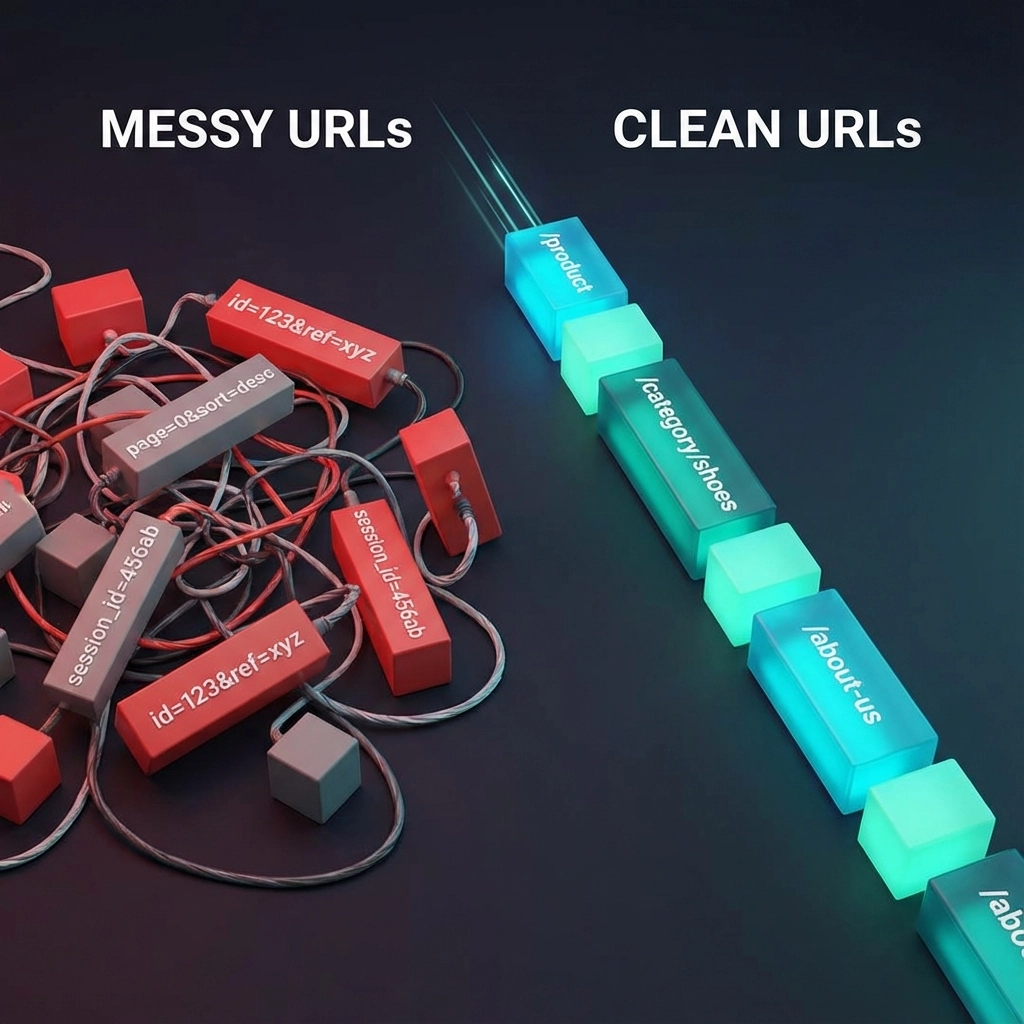
Most Magento stores accidentally create chaos with URLs like /product?id=12345&color=blue&size=large. Instead, you want clean, readable paths like /mens-running-shoes-blue-size-10. This isn't just prettier, it helps Google understand what each page is actually about.
Why this matters for your business: Clean URLs improve your click-through rates in search results. When someone sees /mens-running-shoes versus /product?id=12345, which one looks more trustworthy?
The key is controlling URL parameters strategically. Magento loves creating multiple versions of the same page through filters and sorting options. Set up your system to prevent Google from crawling every possible combination, this saves your "crawl budget" for pages that actually matter.
Quick win: Check if your product URLs include unnecessary parameters. If they do, work with your developer to implement URL rewrites that create cleaner paths.
2. Master Canonical Tags to Stop Duplicate Content Issues
Here's a problem every Magento store faces: the same product can appear on multiple pages. Your red t-shirt might show up in "Men's Clothing," "Red Items," "Sale Items," and "New Arrivals." Google sees this as four different pages with identical content, and that's a ranking killer.
Canonical tags are like saying "Hey Google, this is the main version of this page." They consolidate all your ranking power into one URL instead of splitting it across duplicates.
Business impact: Without proper canonical tags, you're essentially competing with yourself in search results. Fix this, and you'll see individual product pages climb higher in rankings.
Set up canonical tags for all product variants, category pages, and filtered results. This is especially critical for Magento stores because the platform naturally creates multiple pathways to the same content.
Don't forget about pagination either. If your category spans multiple pages, make sure Google understands the relationship between page 1, 2, 3, and so on.
3. Optimise Your Crawl Budget with Smart Robots.txt Rules
Think of your crawl budget as Google's daily allowance for exploring your site. Waste it on unimportant pages, and Google might miss your best content entirely.

Magento stores often expose thousands of unnecessary URLs by default: admin pages, customer account areas, search result pages, and every possible filter combination. Your robots.txt file acts as a bouncer, directing Google toward pages that actually drive sales.
Strategic approach: Block access to customer account pages, checkout processes, search results, and administrative areas. But be careful: blocking the wrong pages can hurt your rankings.
Monitor your 404 errors regularly. If Google keeps trying to crawl pages that don't exist, it's wasting crawl budget that could be spent on your product pages. Set up proper redirects for outdated URLs to maintain link equity.
Pro tip: Use Google Search Console to see exactly how Google is crawling your site. If you notice unusual crawl patterns or excessive 404s, investigate immediately.
4. Implement Rich Structured Data and XML Sitemaps
Structured data is like giving Google a detailed map of your store. It helps search engines understand not just what's on your pages, but what kind of business information they contain.
For Magento stores, this means implementing schema markup for products (with prices, availability, reviews), categories, breadcrumbs, and FAQ sections. The payoff? Rich snippets in search results that include star ratings, prices, and stock status: making your listings more eye-catching than competitors.
Beyond the basics: Don't stop at product schema. Add organisation markup, local business schema if you have physical locations, and video schema for product demonstrations. As AI-powered search grows, this structured information becomes even more valuable.
Your XML sitemap acts as a comprehensive directory for Google. Make sure it's optimised and includes all your important pages: products, categories, blog posts, and key landing pages. Update it regularly as you add new products or content.
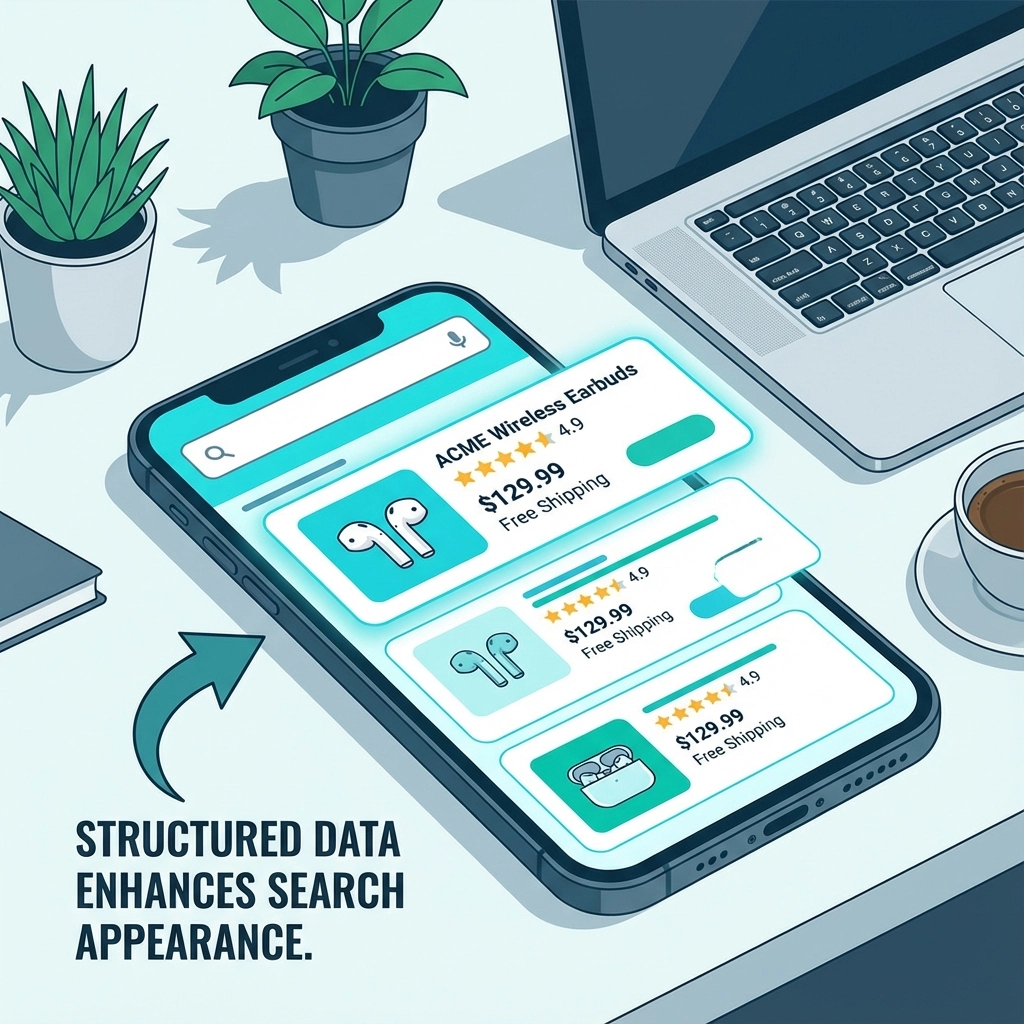
Business benefit: Rich snippets can dramatically improve your click-through rates. Even if you rank in position 3, a rich snippet might get more clicks than the plain listing in position 1.
5. Nail Core Web Vitals for 2026 Performance Standards
Google's Core Web Vitals have evolved for 2026, and the stakes are higher. You're now measured on Largest Contentful Paint (LCP), Interaction to Next Paint (INP), and Cumulative Layout Shift (CLS).
In simple terms: LCP measures how fast your main content loads, INP tracks how quickly your site responds to user interactions, and CLS ensures your page doesn't jump around while loading.
For Magento stores, this means optimising image loading with modern formats like WebP, implementing lazy loading for product grids, and ensuring your site responds instantly to clicks and taps.
Common culprits: Unoptimised images, heavy JavaScript files, and poorly configured caching. Address these through proper image compression, JavaScript bundling, and robust caching strategies.
Use tools like Google PageSpeed Insights and GTmetrix to regularly audit your performance. Set up monitoring so you catch performance issues before they impact rankings.
Real impact: Better Core Web Vitals don't just help your SEO: they directly improve conversion rates. Faster sites convert more visitors into customers.
At NEXT Digital Agency, we've seen Magento stores increase conversion rates by 15-25% just by optimising Core Web Vitals.
6. Perfect Mobile-First Architecture and Navigation
Mobile-first isn't a trend anymore: it's the foundation of how Google evaluates every website. Your mobile experience determines your desktop rankings too.

For Magento stores, this means creating intuitive mobile navigation with collapsible menus, sticky navigation bars, and simplified category structures. Your layered navigation (filters for price, size, colour, brand) needs to work flawlessly on mobile devices.
Critical elements: Ensure your product images load quickly and display properly across all screen sizes. Implement touch-friendly buttons and easy-to-use filters. Make the checkout process seamless on mobile: complicated mobile checkout is a major conversion killer.
Navigation strategy: Keep your most important categories easily accessible. Use breadcrumbs to help users understand where they are in your store hierarchy. Consider implementing a search function that works well on mobile devices.
Business case: Mobile accounts for over 60% of e-commerce traffic in the UK. If your mobile experience is subpar, you're losing potential customers before they even see your products.
7. Build Strategic Site Architecture and Internal Linking
Your site structure tells Google: and your customers: how your business is organized. A logical hierarchy with strong internal linking helps both search engines and users navigate effectively.
Keep important pages within three clicks of your homepage. Create clear category relationships where related products link to each other naturally. Use descriptive anchor text that tells users exactly what they'll find when they click.
Internal linking strategy: Connect related products, link from product pages to relevant category pages, and create pathways from blog content to product pages. This distributes ranking power throughout your site while improving user experience.
Breadcrumb implementation: Use SEO-friendly breadcrumbs that act as semantic signposts. They help Google understand your site structure while giving users an easy way to navigate back to broader categories.
Consider creating hub pages for major product categories that link to subcategories and featured products. This creates a strong topical authority signal for Google.
Taking Action on Technical SEO
Technical SEO for Magento isn't a one-time setup: it's an ongoing process that requires regular monitoring and optimisation. Start with the biggest impact items: clean URLs, canonical tags, and Core Web Vitals optimisation.
The good news? Once you nail these fundamentals, you'll have a competitive advantage that's hard for competitors to replicate quickly. Technical SEO creates compound benefits that grow stronger over time.
If you're running a Magento store and want to ensure your technical foundation is solid, our team specialises in e-commerce SEO optimisation that drives real business results. Because in 2026, technical excellence isn't optional; it's the price of admission to organic growth.
Recent Comments